


Why Cash Still has an Important Role in our Digital World
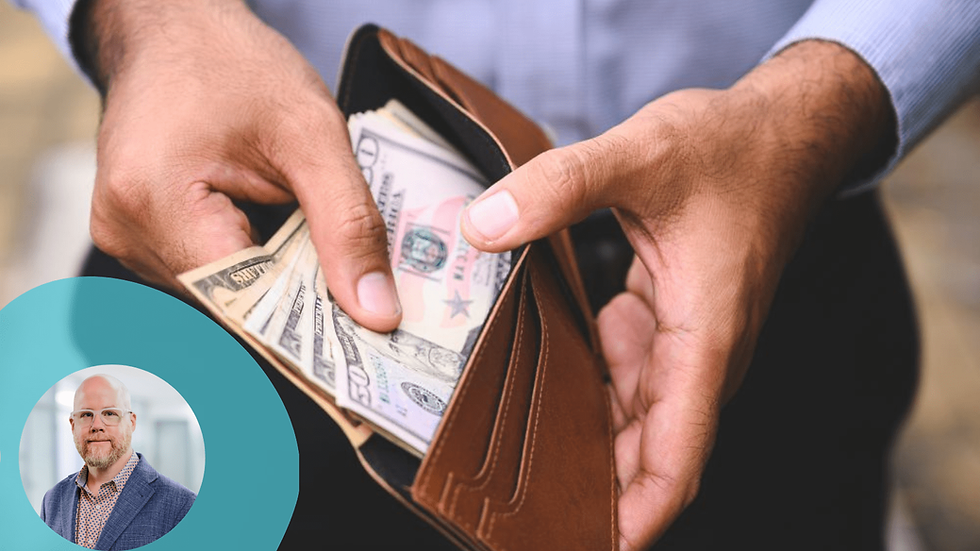
When was the last time you used cash for a transaction?
Many of us can go for months without resorting to cash for our daily business. The convenience of tapping a card is simply too alluring to consider using old-fashioned legal tender. In some areas, cash now accounts for less than 10% of all transactions. And of course, many transactions take place online, where cash is useless. The dream of a cashless society seems to be upon us — almost.
Yet despite the ubiquity and convenience of digital transactions, there is a growing movement to reconsider the importance of cash in our economy — for a number of reasons.
When Systems Fail: Cash as a Fallback Resource
In February 2021, a series of winter storms struck the United States and Mexico, causing power outages and hundreds of deaths. In Texas, rolling blackouts affected 75% of the state, leaving 4.5 million homes and businesses without power for days.
Beyond the obvious human cost, the loss of electrical power in Texas brought normal business to a halt. With no ability to process transactions electronically, consumers and businesses had to resort to an older medium of exchange — cash.
That calamity should have warned us all of the fragility of our digital infrastructure. But in case anyone missed the lesson, a more recent event was even more alarming.
In the early morning hours of October 20, 2025, DynamoDB, a component of Amazon Web Services (AWS), experienced a malfunction that paralyzed internet activity across the globe and caused billions of dollars in losses — all within the space of a few hours.
The problem began as a DNS race condition, in which multiple processes attempt to update DNS records at the same time. DNS (domain name system) acts like a digital phone book, connecting domain names with their appropriate IP addresses. This is what enables users to type in a website URL and be sent to the correct site.
When the process is disrupted, browsers can’t locate the intended destinations, and activity comes to a halt. In this case, the application programming interface (API) for DynamoDB failed, disrupting communication with more than 100 other services operated by AWS — which controls about one-third of the global cloud market.
The cascading effect of this event was quickly evident, and it was catastrophic. Because of one system failure that lasted just over 15 hours, countless businesses lost sales, financial institutions were thrown into confusion and logistics operations around the world stopped. It was the third major outage in five years associated with US-East-1 — a main region in the AWS global cloud infrastructure, located in northern Virginia.
Brief as it was, this calamity exposed the layers of dependency that comprise our digital economy — and how easily it can be disabled. This vulnerability has obvious implications for our national security. The prospect of even more serious events in the future underscores the need for a fallback system that can be used when digital commerce fails.
Thankfully, we already have one — cash. Consumers are already aware of this: a recent Siena Research Institute survey revealed 94% of Americans agree that, during a disaster or public emergency, it is important to have cash since card or digital payments may not be reliable.
A Matter of Fairness
There are also more down-to-earth reasons for retaining cash as a medium of exchange. Today, about 5.9 million households in the U.S. are “unbanked,” meaning they don’t have bank accounts to deposit into or draw from. They must use cash to conduct their everyday business. Another 18.7 million are “underbanked,” meaning they have bank accounts but rely heavily on other resources such as check-cashing services, money orders, prepaid cards and payday loans. For these Americans, cash is not optional; it is essential.
When businesses refuse to accept cash for payment, they are depriving a large portion of the public of their goods and services, while depriving themselves of potential sales. Those who rely most heavily on cash tend to be society’s most vulnerable people: the elderly, the poor and minorities. Thus, the move toward a cashless society widens the wealth gap and excludes millions from daily commerce.
Recognizing the basic unfairness of this trend, there is a now a nationwide movement to require businesses to accept cash transactions. Colorado, Massachusetts, Rhode Island and New Jersey have passed laws to this effect; several cities have followed suit, including Los Angeles, San Francisco, New York and Philadelphia. And in 2021 a bill requiring businesses nationwide to accept cash was proposed in Congress. Here, Americans are clear with their desires: the same survey by Siena revealed that 85% — across the political spectrum — support legislation that requires businesses with a physical storefront to accept cash.
These laws generally exempt online transactions and those above certain dollar amounts. But for everyday transactions, cash is and should be acceptable. Sen. John Fetterman (D-Pa.) has stated the case simply: “If you’re open for business in America, you should take U.S. dollars.” As he and others point out, every dollar bill carries this inscription: “This note is legal tender for all debts, public and private.” If they make their case effectively, America will begin to take that seriously again.


Comments